
LAVCA released its semi-annual metrics on the Latin American startup and VC ecosystem for the first half of 2025. There’s plenty to analyze, but I want to highlight three aspects.
Latam VC investment volumes remain flat
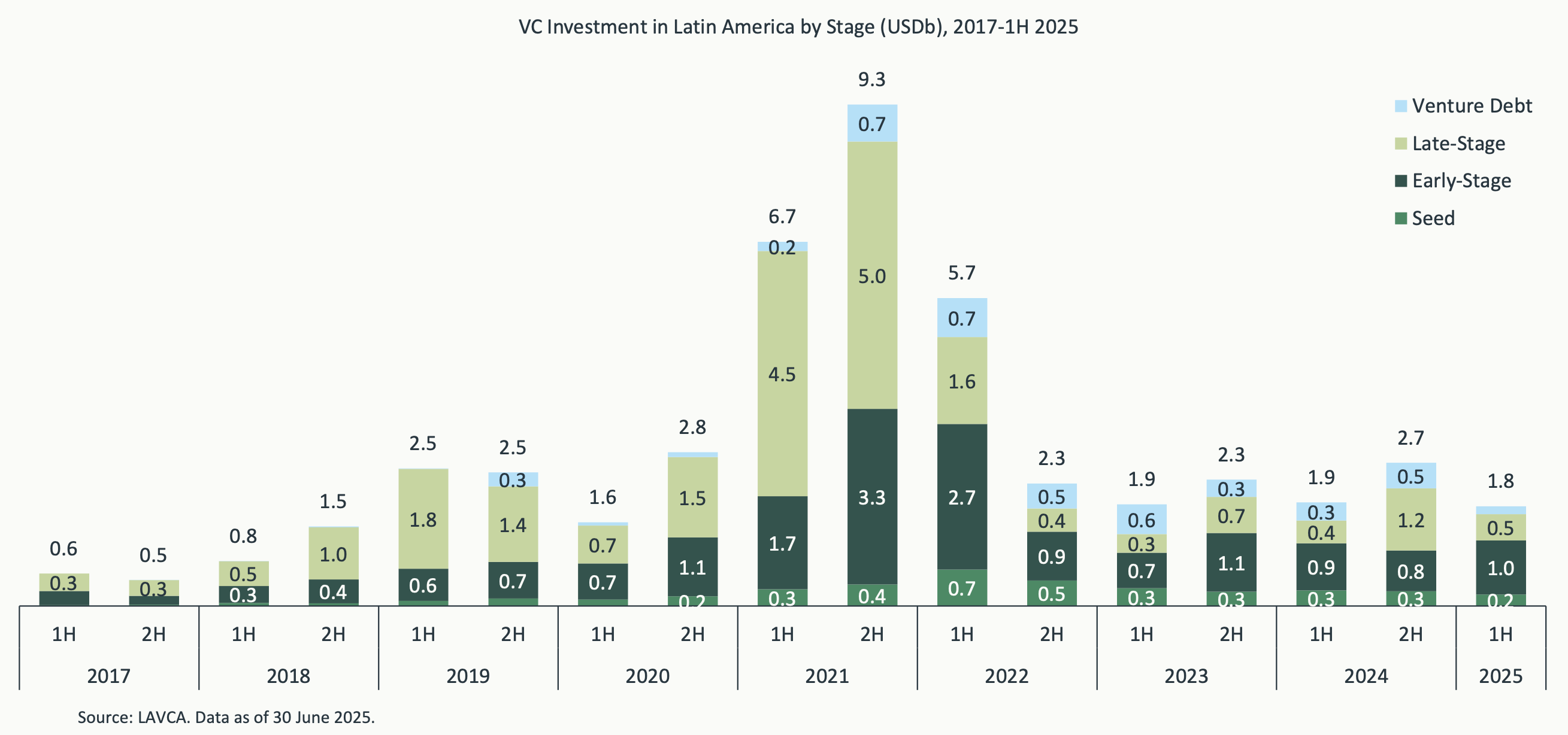
Total investment value stayed essentially flat in the first half of 2025, with a slight downward bias. In fact, volumes have been holding steady at more or less the same level since 2H22, when the global correction in VC fully hit Latin America. The positive side is that this suggests we have reached the bottom of the cycle, and further material declines seem unlikely.
Mexico temporarily surpasses Brazil in VC dollars
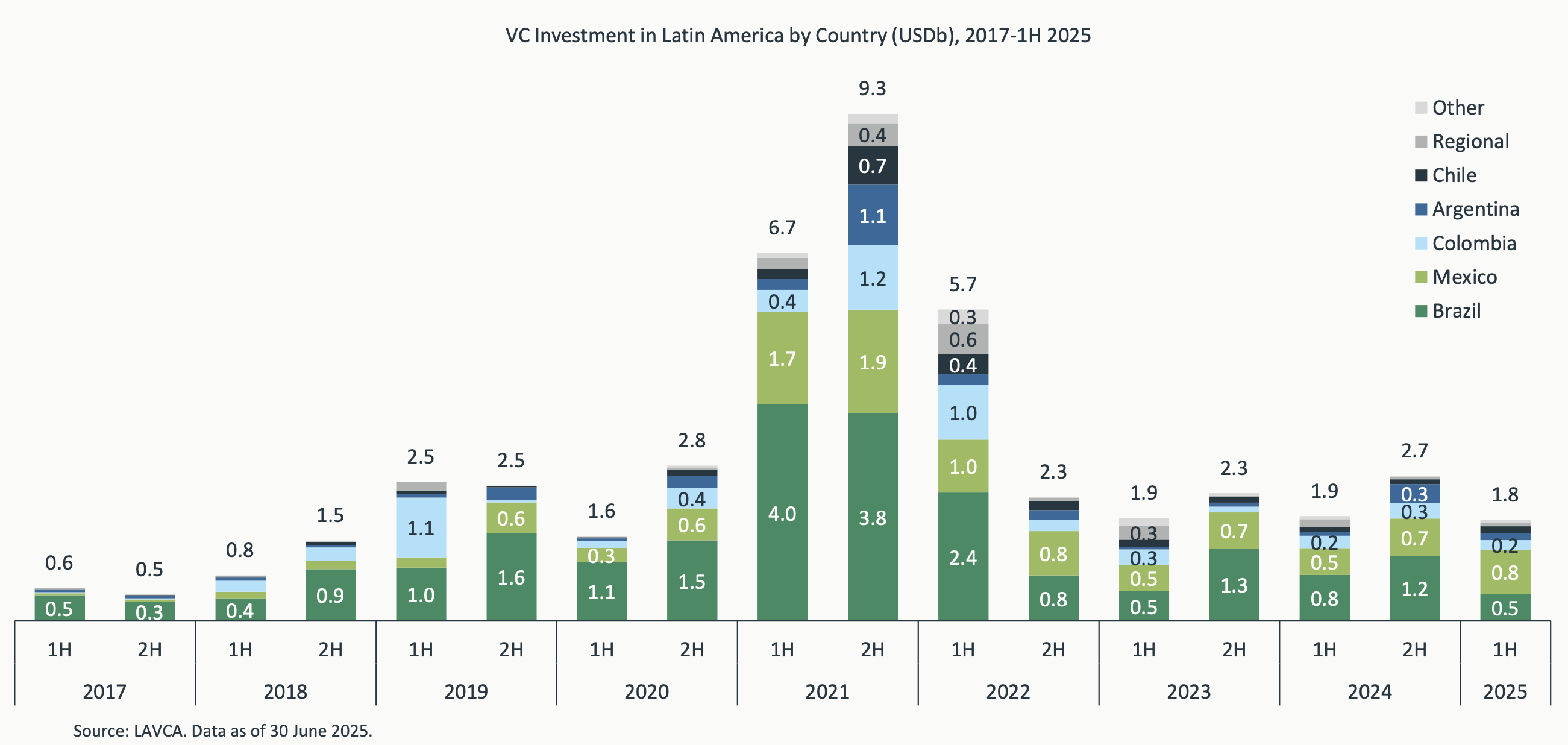
For the first time, more VC dollars went into Mexican startups than Brazilian ones. Brazil saw about a 60% drop compared to 2H24, while Mexico grew slightly. My view: this is anecdotal rather than a structural shift. Historically, Brazil’s ecosystem has been larger and should remain so, but the data highlights Mexico’s resilience.
Graduation rates exemplify the funding crunch
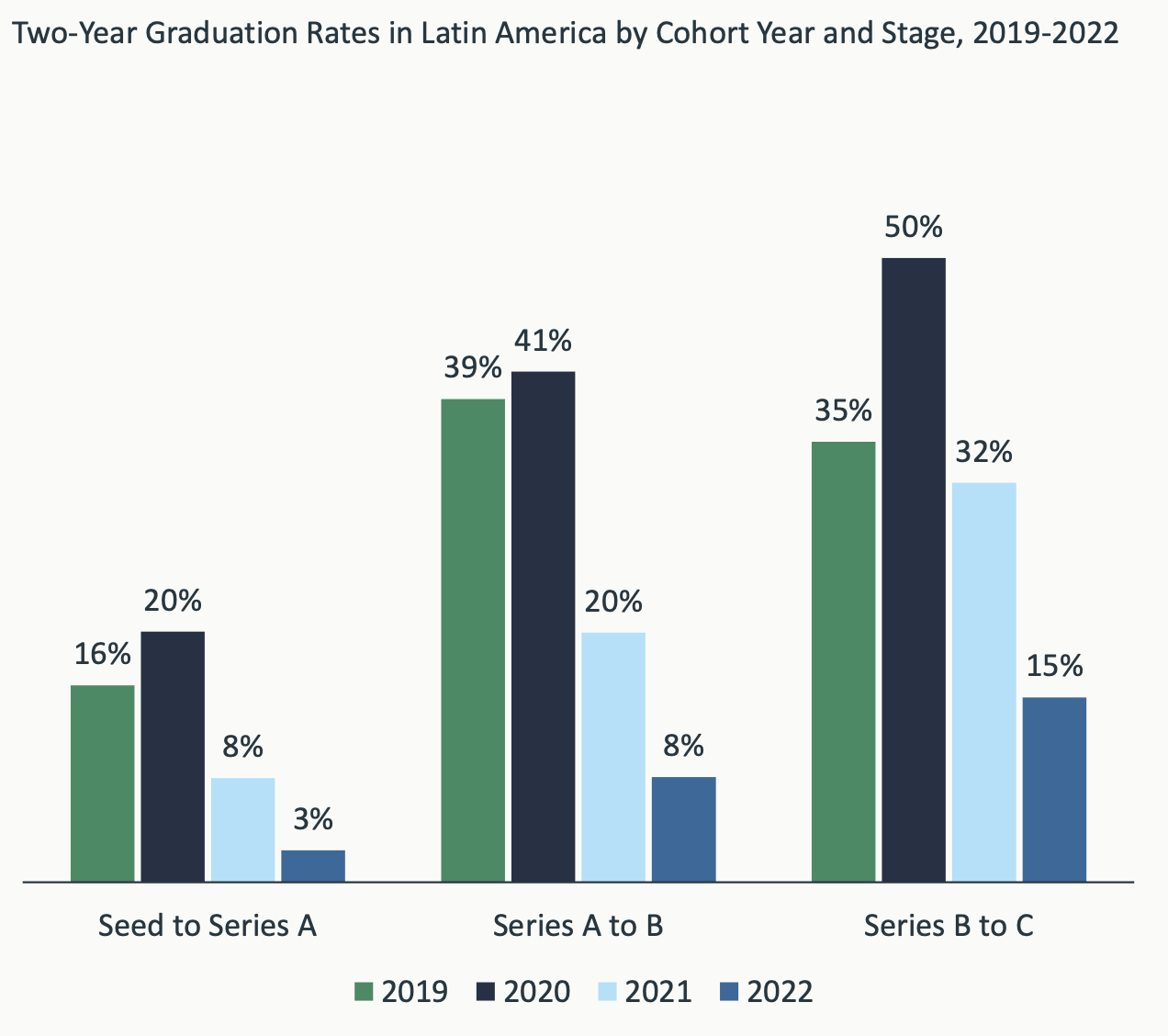
The graduation chart shows how difficult it has become for startups to raise subsequent rounds. “Graduation” means that a startup that raised, say, a Seed round, later raised a Series A. For example, only 8% of startups that raised a Seed round in 2021 have raised a Series A by June 2025. As a comparison, 20% of the 2020 Seed cohort managed to graduate, although, of course, they had one extra year to “graduate.”
The situation is tougher at the earliest stages: just 8% graduation for 2021 Seed rounds (three and a half years later) and only 3% for the 2022 cohort (two and a half years later). Graduation rates were much higher for startups that raised Seed rounds before the pandemic and then secured a Series A during the market euphoria of those years. The current weak statistics may also reflect that many companies managed to raise Seed rounds at the peak that probably would not have been funded at other points in the cycle. It would be useful to compare today’s numbers with the pre-2021 period, but my sense is that graduation rates back then were higher than what we see now. Raising a Series A has become a serious bottleneck in the ecosystem. Many startups are extending runways by burning less capital since 2022, but the path to scaling and fundraising is clearly harder.
Looking ahead
If global conditions continue to improve, especially signaled by lower reference rates, more IPOs, and exits, the Latin American venture capital ecosystem should also see a rebound. At Dalus, we have been active even in this tougher environment, completing four new deals this year along with four follow-ons. This gives me optimism that high-quality founders will continue to attract the right capital. Overall, Latin America venture capital in 2025 shows resilience, even as funding challenges remain.

Pingback: Startup Equity & Dilution: What’s Normal in 2025? | Latin American VC