
Love statistics, so I have to share this chart I came across—it’s a perfect example of the classic phrase, “correlation is not causation”.
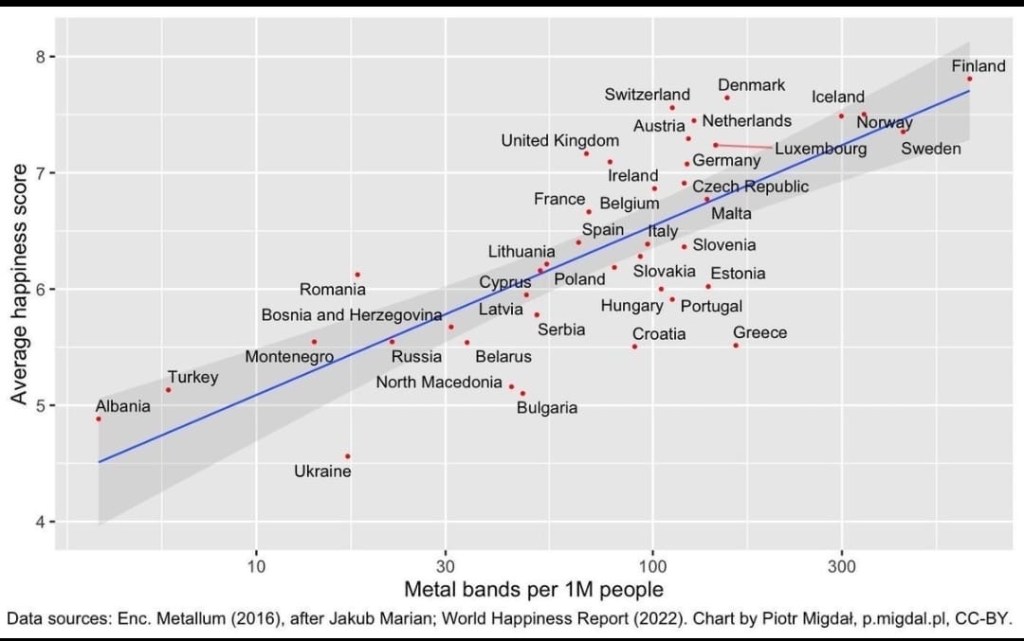
At first glance, the chart seems to suggest that having more metal bands per capita makes a country happier. I think we can all agree that’s not quite how it works. Maybe the band members themselves are happier, but the rest of the population? Unlikely.
What about causation in the other direction? Could happier countries somehow produce more metal bands? Hard to say. It’s not that happiness itself fuels a thriving metal scene, but maybe the underlying factors that make a country score high on happiness—like wealth, education, and cultural openness—also create an environment where more music can flourish. Although metal, of all genres, seems one of the more unlikely—metal isn’t exactly known for being feel-good music.
So, the correlation doesn’t mean metal causes happiness or vice versa; it just means both could stem from similar conditions.
Whenever you see correlation, don’t jump to conclusions about causation. The real story is often more complex than it looks.

Muchas gracias, Diego Saludos, Enrique
LikeLiked by 1 person