
Two days ago, a massive scandal shook the Argentine crypto scene. A group of individuals close to President Javier Milei launched a new cryptotoken named “LIBRA,” capitalizing on the President’s signature slogan: “Viva la Libertad” (“Long live freedom” in English). Barely three minutes after its creation, Milei himself promoted LIBRA on his social media accounts, accompanied by a vague message that the token would help finance small businesses and ventures in Argentina.
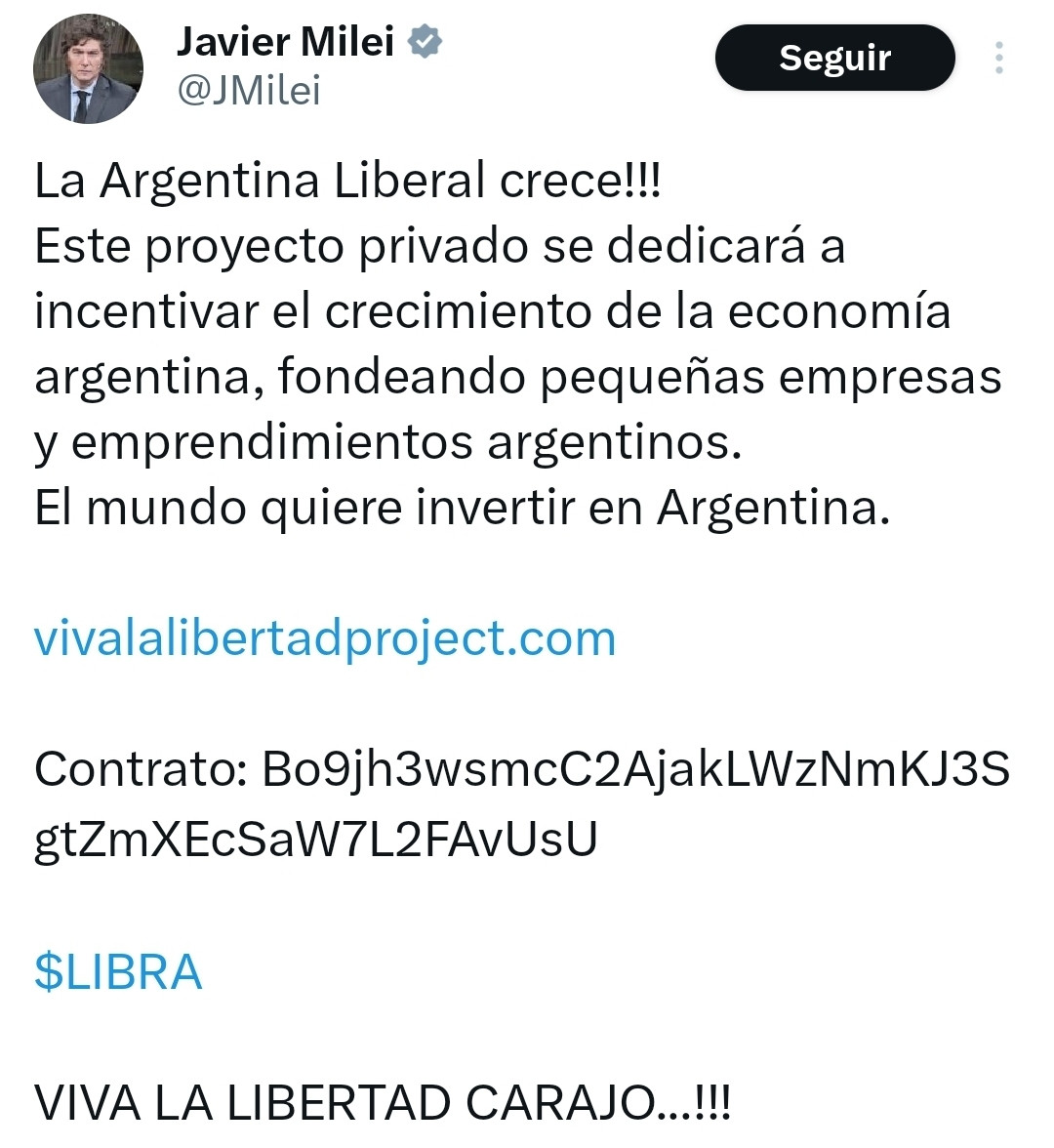
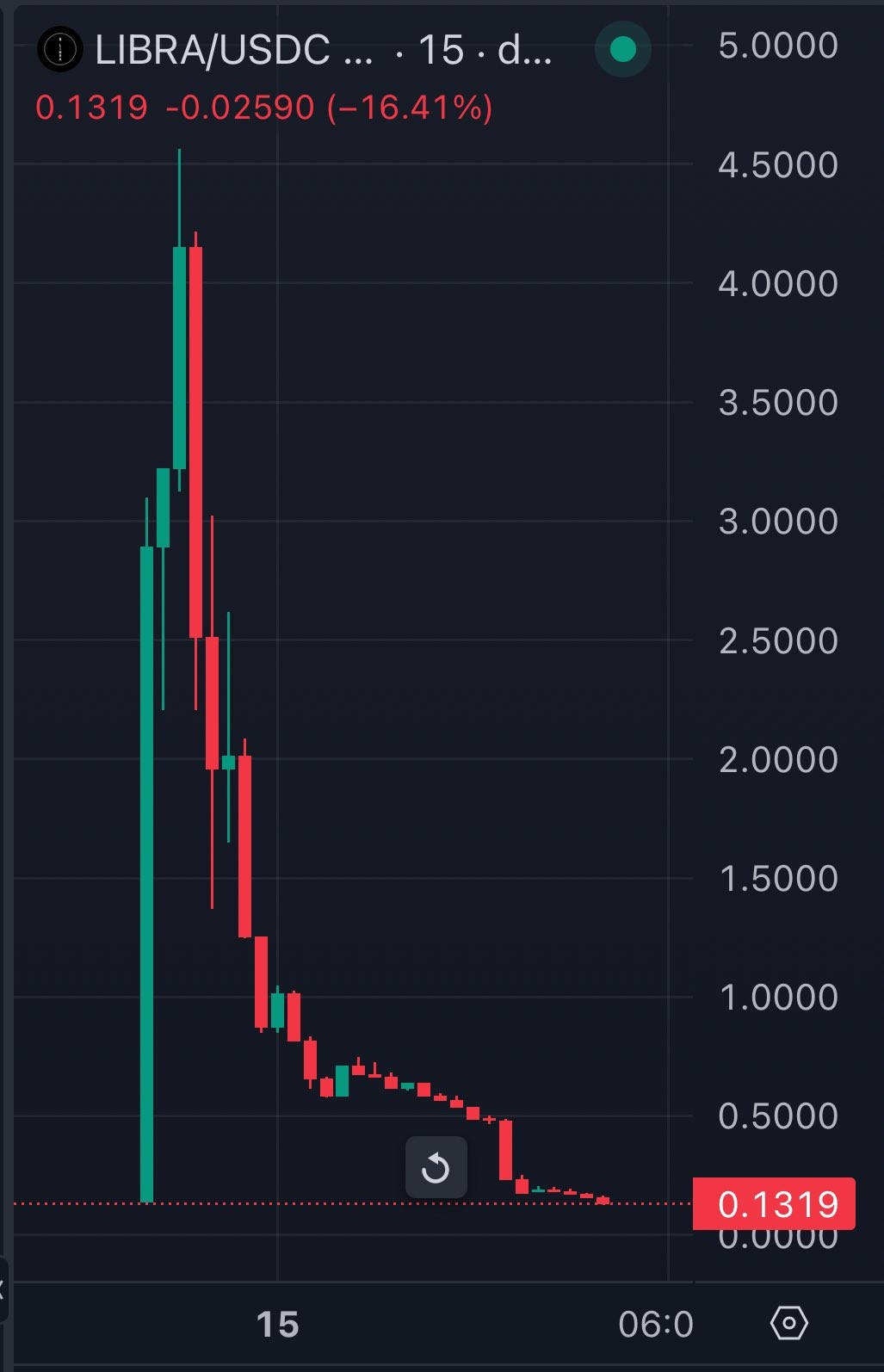
This endorsement prompted around 44,000 people to invest, believing it to be a presidentially backed project with patriotic intentions. The token’s value skyrocketed in mere hours. However, once prices peaked, the key founders—who collectively owned a staggering 70–85% of all tokens—cashed out their entire holdings. This triggered what is known as a “rug pull,” where the token’s price collapsed.
While the initial growth rewarded the founders with an estimated 126 million dollars in profit, most of the 44,000 investors lost their money. President Milei soon deleted his promotional post, claiming ignorance of the details behind LIBRA. Regardless of whether Milei was directly involved or merely provided public support, the damage to those who trusted the hype was already done.
The LIBRA token is a clear example of a meme coin, or even worse, a “shit coin.” Meme coins are cryptotokens that often start as jokes or internet memes. They can spark quick hype but have no serious plan, mission, or real-world application. In almost all tokens, the value comes from the balance between demand and supply, but in the case of a meme coin, demand is fueled exclusively by social media buzz rather than real or expected tangible utility.
“Shit coins” is an informal term that broadly refers to cryptotokens lacking clear use cases, well-defined roadmaps, or reputable development teams. They are often created rapidly, in unlimited quantities, and frequently with the aim of generating quick profits for their creators. Anyone with basic know-how and a few hundred dollars can launch a token, thanks to the open nature of many blockchain platforms. Because there are no significant barriers to entry, an infinite number of these coins can flood the market, chasing a finite pool of risk-prone speculators.
Both meme coins and other low-effort tokens thrive on speculation. There is typically no real-world service or product behind them. Their worth hinges on hype. Once excitement fades, or if large holders sell all at once, prices can drop to near zero and never recover. Almost all tokens are gambles, but in this category, the gamble does not even follow a narrative of utility or value creation. While some traders may profit from short-lived price swings, long-term buyers often bear the brunt of abrupt crashes.
The LIBRA incident highlights the danger of unregulated token launches. Without solid guidelines and oversight, fraudsters stand ready to exploit unsuspecting individuals. The same story played out in the early days of stock markets before investor protections were introduced. Scammers would offer “can’t lose” deals or promise massive returns without any actual substance behind them.
Regulation establishes a framework that provides clear guidelines and standardizes the disclosure of detailed information about teams, business models, and potential risks. Moreover, promoters must register their offerings and comply with specific standards that provide some legal recourse in case of fraud. Regulation also discourages rug pulls, pump-and-dump schemes, and other manipulative tactics designed to deceive ordinary people.
The LIBRA scam stands as a stark reminder that the crypto world, still considered the “Wild West” of finance, needs robust rules to protect investors. While innovation and open access to markets are crucial, allowing anyone to launch a token in minutes also opens the door to exploitative schemes.
The LIBRA episode is a terrible outcome, with tens of thousands of investors losing their money because of President Milei’s harmful endorsement. It underscores three crucial lessons: first, blind trust in hype or celebrity endorsements can be disastrous. Second, crypto tokens are inherently speculative and often lack real-world value. Lastly, effective regulation would deter many of these scams and protect regular people from large-scale fraud. It remains to be seen whether Milei will face legal repercussions for promoting this scheme.
If we fail to implement safeguards, we risk repeating history’s mistakes—allowing opportunists to prey on those driven by hope rather than facts.

Not a dime of empathy for uneducated opportunists that invested in Libra expecting a quick profit and got scammed. They deserve it. They took the risk and meet consecuences. What is needed is NOT regulation, but EDUCATION instead. Educate people that all crypto is a scam. All of it. ALL OF IT. Because there is no need nor use TODAY for any crypto other than to speculate while in the pursue of getting rich easily and without any effort nor creating any value.
There is no single cryptocurrency today that has any real usage. All of them are a scam. SAY THAT in your article, cryptobro.
LikeLike